 Wishbite
How to estimate portion sizes without a food scale
Use references you always have: your palm for meat or fish, a fist for rice or pasta, a cupped hand for snacks and a thumb for fats like butter or oil. These are rough, but they are consistent, and consistency matters more than precision when you keep a food diary over weeks.
Coming soon to iPhone
Quick references
Hands differ in size, so these work best as your personal standard. For more on measures, see cooking weights and measures.
| Food | Reference | Rough amount |
|---|---|---|
| Meat, fish, tofu | Palm of your hand | About 100 g |
| Rice, pasta, cereal | Your fist | About 1 cup cooked |
| Nuts, dried fruit | Cupped hand | About 30 g |
| Butter, oil, nut butter | Your thumb | About 1 tablespoon |
| Cheese | Two thumbs | About 30 g |
Calibrate once
- Weigh or measure your usual bowl of rice or pasta one time.
- Notice how full your usual plate and glass are.
- Use those as your own references from then on.
Meals eaten out
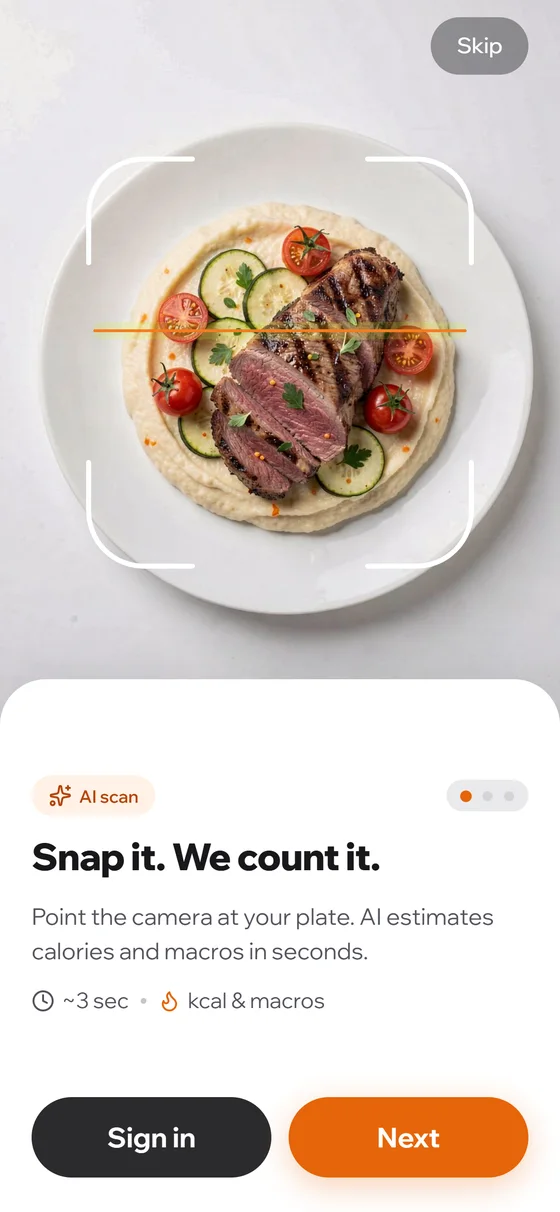
Restaurant portions are often larger than home portions, and sauces and cooking oil add a lot. Break the plate into parts, estimate each one and add a line for oil or dressing. In Wishbite, hidden extras like oil and sauces are marked as unknown in a photo result so you can add them yourself; see the food scanner.
Common mistakes
- Forgetting cooking oil and dressings.
- Logging dry weight for cooked rice or pasta, or the other way around.
- Skipping drinks.
- Guessing large portions as "one serving".
Frequently asked questions
How accurate is the hand method?
It is rough, but used the same way each time it is good enough to show patterns in your eating.
Should I log cooked or raw weight?
Either, as long as the database entry matches the state you log.
How do I log a mixed dish?
Split it into main parts, estimate each, or log it as one dish with an estimated total.
Can a photo estimate portions?
It can give an estimate, but portions are the hardest part to judge from a picture, so check and adjust.